Damaged or missing shingles
Replacement shingles need to fit the existing roof and fasten to sound decking. The adjoining tabs must lift without tearing or breaking so the repair can be woven into the courses above and beside it.
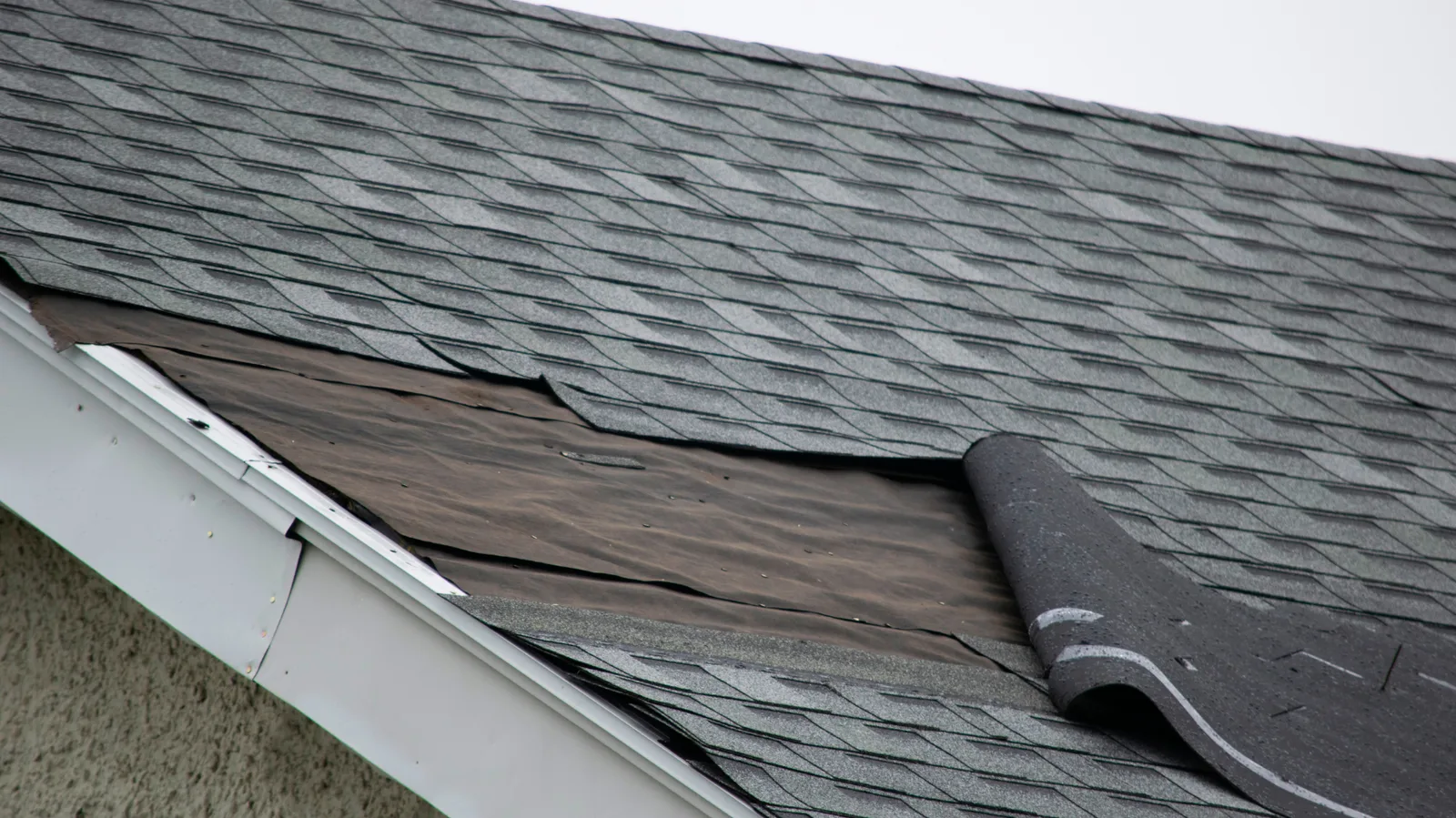
Repair the failed roof detail and the material around it, with help understanding when a repair is enough.
A shingle that has lifted, a split collar around a plumbing vent or flashing that has pulled away from a wall leaves an opening in a system meant to shed rain. A repair needs to fix that opening and restore the connection to the roof around it.
We examine the affected area and the adjoining shingles, underlayment, decking and flashing. If water has reached damaged wood, replacing only the visible shingle leaves part of the problem underneath. The condition of those layers determines how far the repair needs to reach.
For water coming inside, our roof leak repair service goes further into tracing the entry point. Tell us the room and roughly when you first saw the leak.
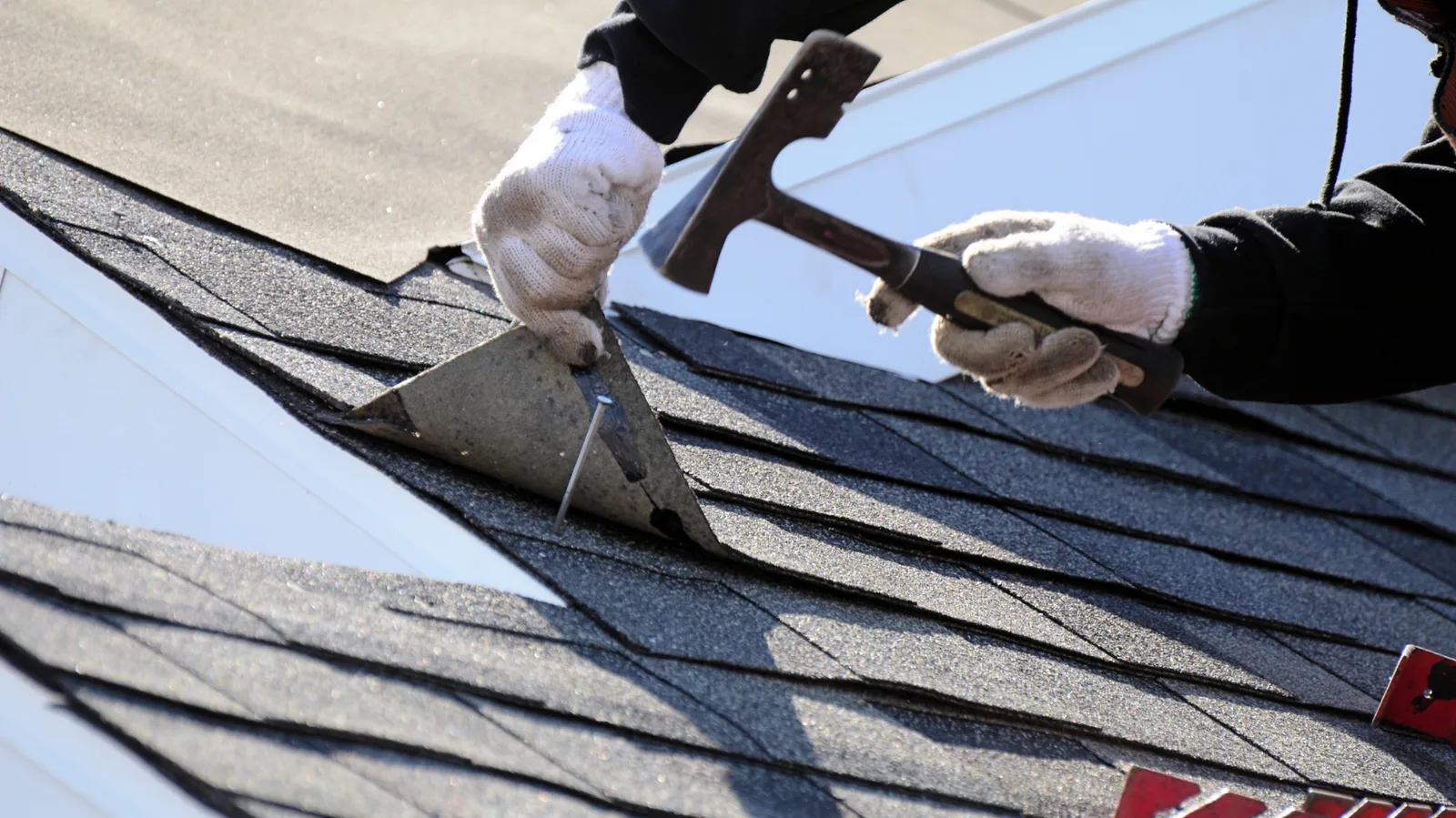
Different roof details need different connections. The aim is to return water to its path down the roof and off the edge.
Replacement shingles need to fit the existing roof and fasten to sound decking. The adjoining tabs must lift without tearing or breaking so the repair can be woven into the courses above and beside it.
A cracked collar around a pipe leaves a gap where rain can run beneath the roof. The base, collar and nearby shingles are checked together so replacing the boot also restores the surrounding waterproofing.
Flashing directs water where the roof meets a vertical surface. Loose metal, failed connections and deteriorated adjoining material call for a repaired assembly; a surface bead of sealant does not replace that connection.
A small visible defect does not always mean a small scope. These findings explain why the work changes.
| Finding | Why it matters | Roofing decision |
|---|---|---|
| Sound surrounding shingles and deck | The repair can connect to usable material and maintain the roof’s water-shedding layers. | A local repair is a practical way to keep the roof in service. |
| Damage below the opening | Wet or deteriorated decking cannot support the covering and fasteners as intended. | Open the affected area far enough to replace damaged layers and reconnect sound material. |
| Brittle shingles or deterioration across a slope | Moving one shingle breaks the next, or defects extend beyond an isolated area. | Compare a larger repair with replacement instead of repeating patches that cannot tie in properly. |
The repair follows the defect rather than treating every roof symptom the same way.
The roof walk looks at the concern, likely water paths and adjoining connections. Existing repair materials are considered because they can hide an opening or change how the new work joins.
Damaged covering and underlying material are addressed together. Replacement flashing, underlayment or shingles need a sound base and compatible connections.
The edges and overlaps matter as much as the new material. The repair must shed water into the roof around it and maintain the path toward gutters or the roof edge.
The damaged area, roof height and pitch, access, material availability and condition below the covering shape the price. Flashing at a tall chimney involves different labor from replacing a small group of accessible shingles.
Decking damage widens a repair because the covering has to be opened and the base restored. An older or discontinued shingle can also change the material options. The inspection helps establish those conditions before a contractor prices the work.
If repair has become a recurring expense, read about roof replacement to understand what replacing the whole system changes.
Yes, when compatible replacement material is available, the adjoining shingles remain workable and the repair can connect to sound decking and flashing. If those conditions fail, the work needs to reach farther.
Yes. A local defect on an otherwise sound roof is a good reason to consider repair. Widespread deterioration, damaged layers or material that will not support a repair changes that answer.
Sealant can cover a surface gap without repairing the flashing or water path below it. Water can also enter somewhere else and travel to the same indoor spot. We examine the roof connection instead of assuming the stain marks the entry point.
Call and say that water is coming in. Stay off the roof, keep people away from sagging ceilings and wet electrical fixtures, and move belongings only where it is safe to do so. A temporary protective measure and the permanent repair have different jobs.
Tell us what changed, where you noticed it and the property address. A free inspection helps determine the repair the roof actually needs.