Severe Wind Damage: Roof Work and Coverage Boundaries
Published · Updated 2026-10-03
Severe wind can leave displaced covering, an exposed roof or damage that reaches the structure. The first question is the safe condition of the property; the roofing scope and insurance decision follow from separate assessments.
Tell Jenks Roofing Pros about active water entry or visible roof changes. Request a free inspection when the property can be safely assessed, and use the insurer’s actual loss-reporting process.
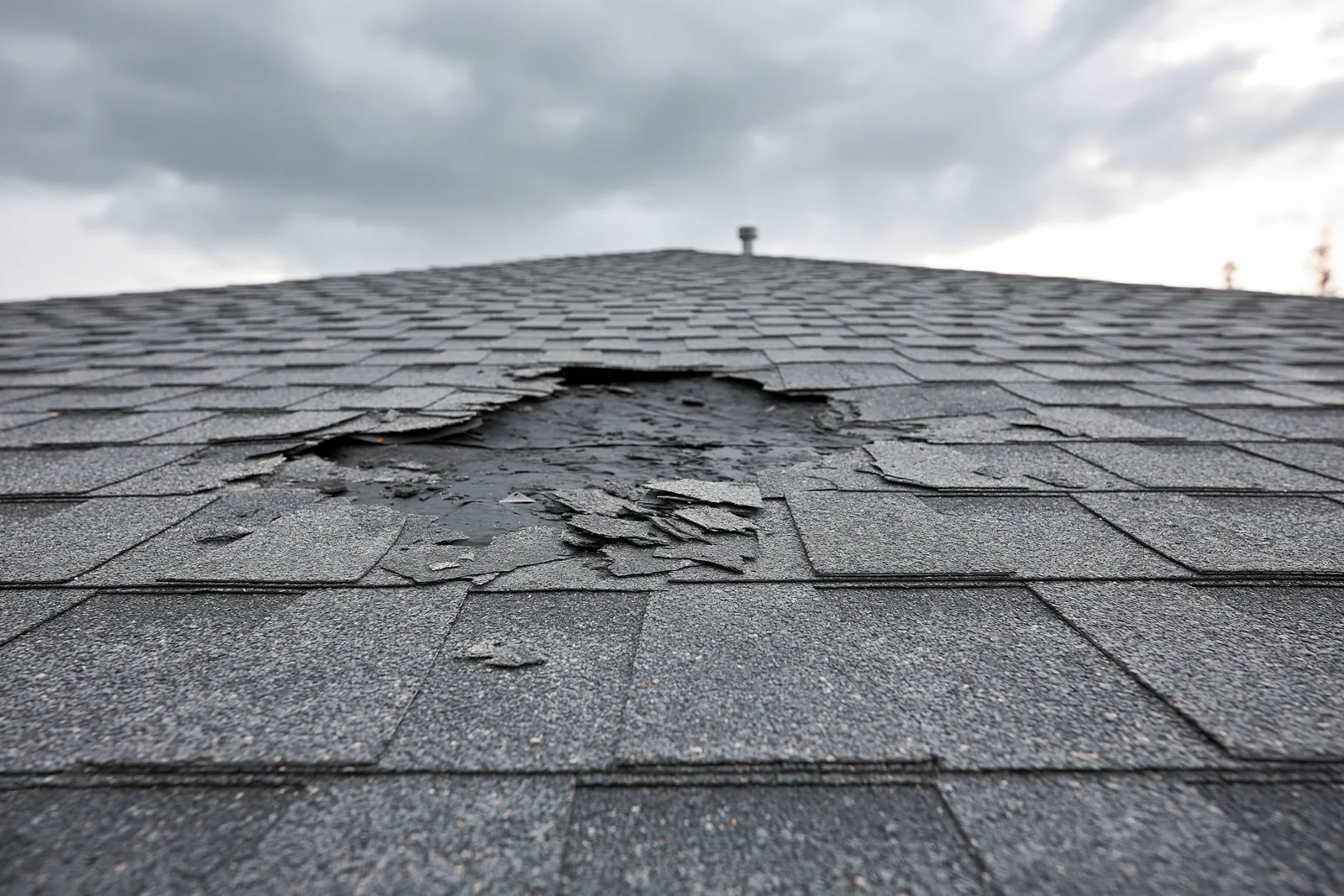
Safety comes before a roof inspection
Do not climb a damaged roof or enter an unstable area. Fallen limbs, exposed wiring, sagging ceilings and structural damage can require emergency or other qualified assistance beyond roofing. Roofing work cannot substitute for that response.
When safe, describe the affected structure and whether water is entering. Existing observations or photographs can help explain the concern; there is no need to create a roof-level damage inventory yourself.
Wind damage changes the roof’s connections
Lifted or missing shingles interrupt the overlap that sheds rain. A disturbed ridge or edge can also expose layers below. Damage around flashing and penetrations needs a different repair from a torn shingle in the field.
The surrounding material determines what can be repaired. A replacement piece needs sound adjoining covering and base. Broad damage, brittle shingles or affected decking can make a larger scope useful.
Temporary protection has a separate purpose
Temporary covering may help protect an exposed area before permanent restoration, depending on safe access and the condition. It does not restore the entire assembly or guarantee that no further water will enter.
The permanent work should identify covering, base and details that need repair or replacement. Tree removal, structural work and interior restoration may require separate coordination rather than being assumed part of the roof estimate.
Covered cause does not mean every cost is paid
The actual policy controls covered loss, exclusions, deductible and valuation. Wind or tornado damage needs the insurer’s determination; wear, unrelated deterioration and upgrades can have a different responsibility.
A separate wind/hail deductible or roof-specific actual-cash-value provision can affect the owner’s portion. No roofing inspection or estimate can promise the policy payment or claim outcome.
The Oklahoma Insurance Department’s wind and hail guidance explains policy distinctions.
Understand the repair and claim scopes together
The roof proposal should explain the needed work and assumptions. The claim documents explain the insurer’s covered scope and payment. A difference between them needs clarification before an insurance total is treated as the complete project budget.
Concealed damage may become apparent during removal. The agreement needs a process for that newly exposed work. The inspection should not guarantee conditions it cannot see.
Request an inspection after wind damage
Read storm damage roofing for inspection and repair choices, and roof insurance for payment terms.
Request a free inspection with Jenks Roofing Pros for the property’s roofing concern. Make active water entry clear when you call.