Gutters, Flashing and Drip Edges: How Roof Water Moves
Published · Updated 2026-10-03
Shingles shed rain across the broad roof surface. At a wall, pipe, chimney or roof edge, other parts have to keep that water moving outside. A repair works best when it follows that connection rather than simply covering the place where a drip appeared.
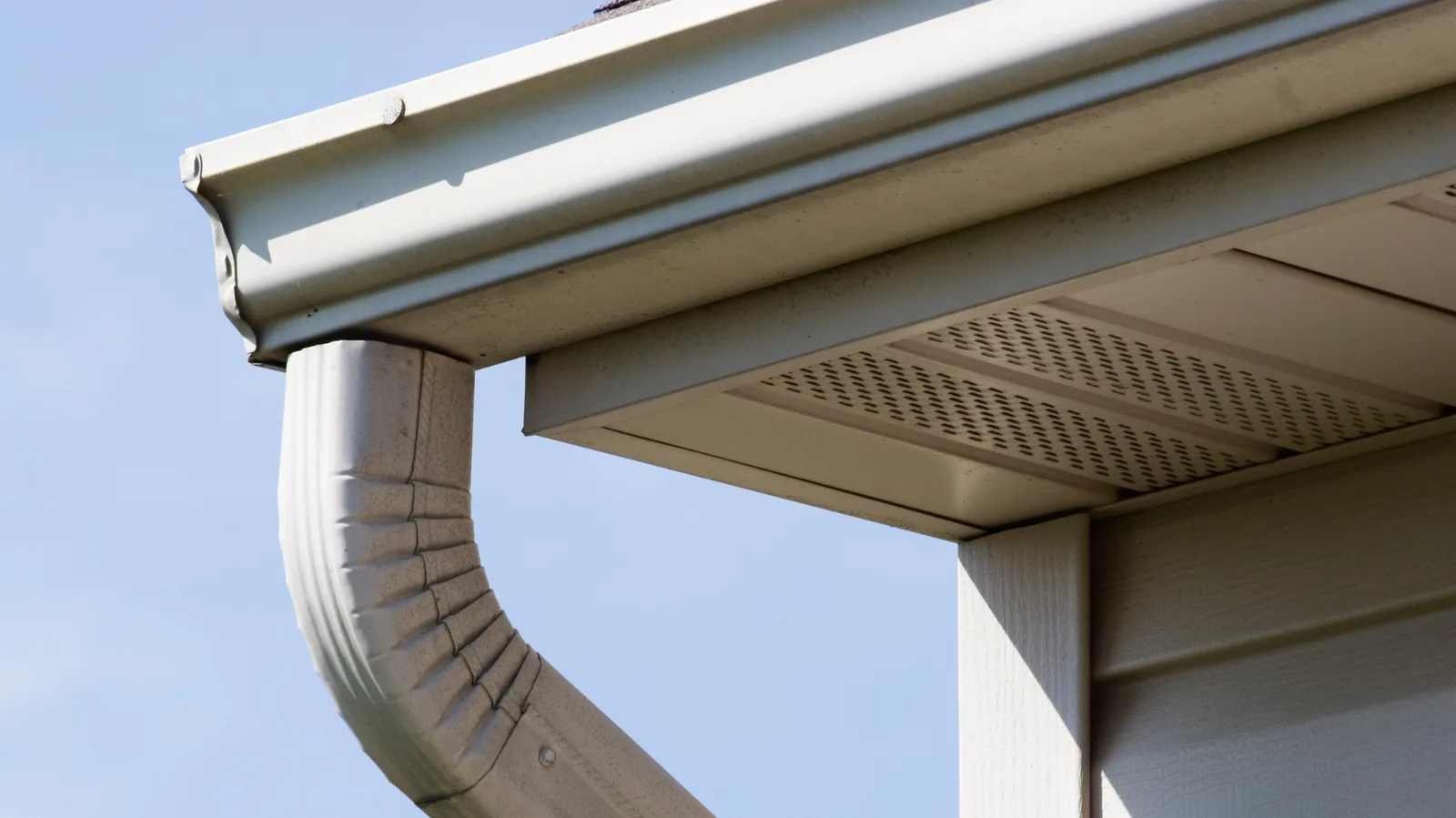
Flashing carries water past a roof opening
Flashing is the metal or compatible roofing material fitted where the roof meets a wall or where a chimney, vent or skylight interrupts the surface. It gives water a continuous path around that interruption and back onto the roof.
At a sidewall on a shingle roof, step flashing overlaps with the shingle courses. Each piece directs runoff onto the course below it. At a chimney, several flashing pieces and connections work together; the uphill side has to manage water arriving from above as well as rain that lands beside the chimney.
When a joint pulls away, metal corrodes or adjoining material deteriorates, water can enter below the shingles. Covering the surface with sealant can hide the opening without restoring the overlapping connection. The repair needs to address how the flashing joins the wall, the roof covering and the layers beneath.
A drip edge protects the roof’s lower connection
Drip edge is the formed metal at the eaves and rake edges. It helps move water off the roof edge and protects the edge of the decking and fascia. Its position and overlap with the underlayment and gutter determine how those parts work together.
Water that runs behind an edge connection can wet fascia or the roof base rather than dropping into the gutter. Replacing a gutter alone does not fix a roof-edge connection that is directing water behind it. The inspection looks at both parts so the repair fits the path water is taking.
During replacement, the roof edge is part of the new system. Underlayment, edge metal and shingles are connected in the correct order for the roof and product requirements. That small-looking strip belongs in the work discussion alongside the much larger shingle field.
Gutters finish the route off the roof
A gutter collects runoff at the eave and carries it toward a downspout. Its pitch, attachment, joints and outlet all affect whether water leaves as intended. A blockage at the outlet can fill a sound-looking gutter; a sag can hold water even when the outlet is clear.
If water spills behind the gutter, the attachment and roof-edge connection need checking. If it spills over the front, blockage, capacity or pitch can be part of the explanation. Those symptoms lead the roofer to different parts of the system rather than to one universal gutter fix.
Our gutter services explain repair and replacement choices for the gutter itself. If the trouble begins at the roofing above it, the roof-edge connection needs attention too.
The indoor stain does not locate the roof opening
Rain can move below the covering and along the decking or framing before appearing indoors. A stain beside a chimney is useful information, but it does not prove the opening is directly above that stain.
That is why a roof repair starts by examining the likely water route, the flashing and the surrounding covering. Once the failed connection is identified, the condition of the adjoining material determines how far the roof needs to be opened. Damaged wood or brittle shingles can make the work larger than the visible gap.
If water is reaching a room, roof leak repair focuses on tracing the entry and restoring the affected roof layers. Tell us the room and roughly when you noticed the leak; you do not need to investigate the roof yourself.
What a repair to these details needs to accomplish
A sound repair gives water an uninterrupted route from the upper roof to the edge and outlet. New flashing must join sound adjoining materials, gutter attachment must support the intended pitch, and damaged roofing layers need to be addressed rather than concealed.
Sometimes one component needs replacement. Sometimes the connection between two usable components is what failed. The inspection and the accessible condition determine which work will restore the roof’s function.
Stay off the roof and do not reach across an edge to inspect a gutter. If water is entering now, call and say so; keep people away from sagging ceilings and wet electrical fixtures.
Request a flashing, roof-edge or gutter inspection
Jenks Roofing Pros can help with a leak at a roof edge, flashing concern or overflowing gutter. Request a free roof inspection and tell us what you noticed and where the property is. A roofer can examine the connection and explain the work it needs.