Roof Changes to Notice After Wind or a Storm
Published · Updated 2026-10-03
You can ask for roofing help without getting onto the roof. A missing piece seen from the ground, a changed gutter or water indoors can supply the starting concern after a storm.
Jenks Roofing Pros can examine the roof and discuss the work. Request a free inspection or call and say water is entering now if that is the immediate problem.
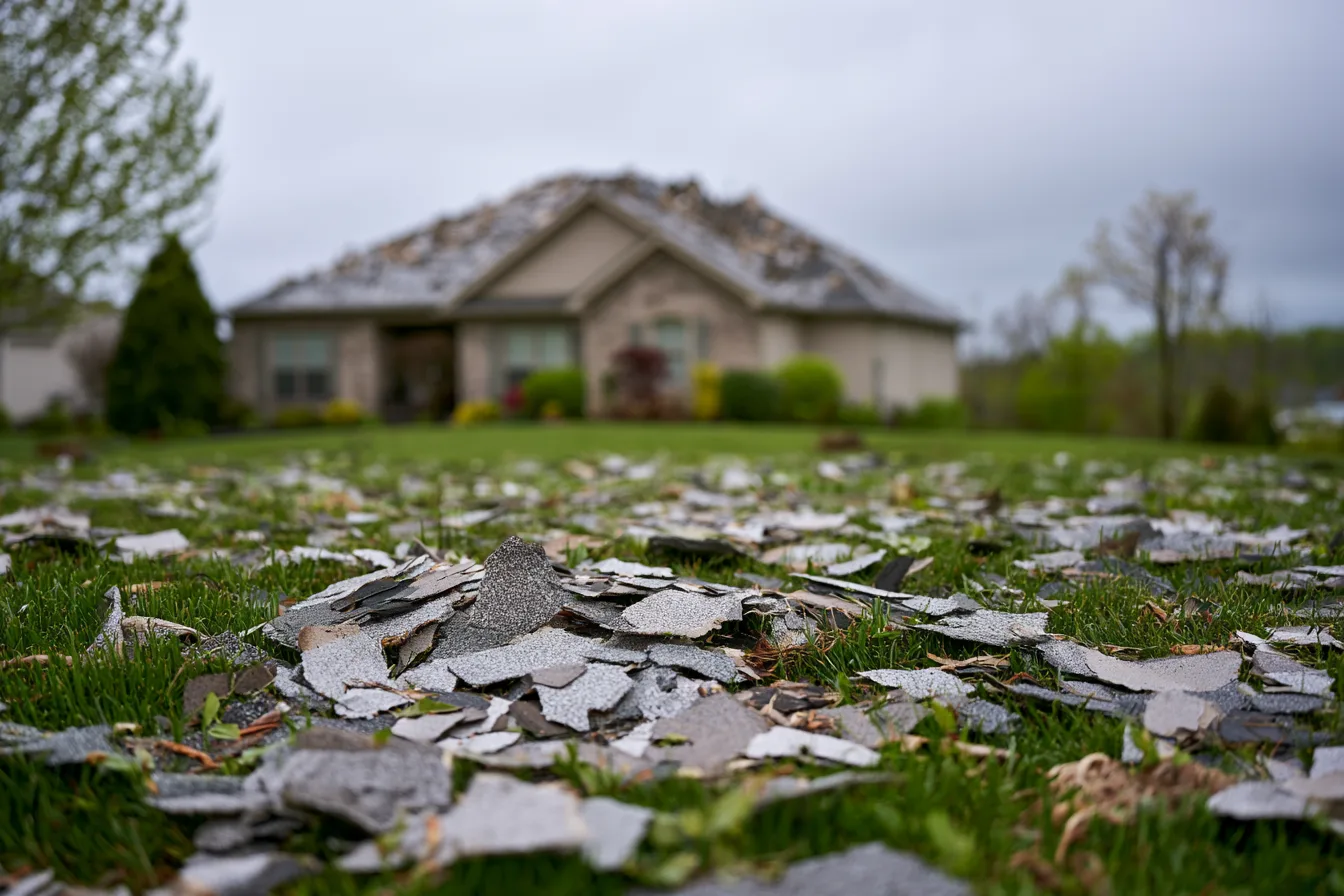
Missing or displaced covering interrupts the water path
Wind can lift or tear shingles and disturb roof edges. A changed roof line or visible missing material deserves a closer professional look even when there is no indoor stain. The covering needs to keep rain on its intended downward route.
The repair question includes what remains around the affected area. A few displaced shingles can suit local work when the adjoining material and base are sound. Brittle or broadly worn covering can change how a repair can be connected.
A fallen limb can affect more than the top surface
A branch impact can disturb shingles, decking or underlying structural components. The visible hole does not necessarily show the full affected condition. Large or unstable limbs also present a safety concern separate from the roof repair.
Do not pull a large limb from the roof yourself or stand beneath an unstable damaged area. Tree removal, structural evaluation and roofing work may need separate coordination based on the actual impact.
Changed gutters and edges deserve their own examination
A separated gutter, sagging section or damaged downspout can alter where runoff goes. The roof edge and gutter must work together, so water behind a gutter can require attention above the gutter as well as to its attachment.
Describe the visible condition from a safe place on the ground. There is no need to lean from a ladder to find the failed joint. The repair should follow the water route and affected support.
Indoor water does not identify the exact roof entry
A stain or drip can appear away from the opening because water travels beneath the covering. The roofing examination needs to consider likely flashing, penetration and covering failures rather than patching only the area above the room.
For active water, call and make that clear. Stay away from sagging ceilings and wet electrical fixtures. Temporary roof protection may be a separate first scope when safe access and condition permit it.
Weather context and damage findings stay distinct
A storm at the property or nearby helps explain when a change was noticed. It does not prove every current roof condition resulted from that event. Existing wear, previous repairs and the affected material need to be considered together.
Coverage then follows the policy and insurer’s determination. A roof inspection can describe condition and work without promising that the event or proposed project will be accepted as a covered loss.
Request a roof inspection after wind or a storm
Our storm damage roofing page develops the repair and policy boundaries. Tell us the address and the change you noticed.
Request a free roof inspection with Jenks Roofing Pros to get the actual concern looked at.