Asphalt Shingles or Metal: Compare the Whole Roof
Published · Updated 2026-10-03
Shingles and metal offer different appearances and assembly details. The better choice for a particular house depends on the roof, proposed work and selected product, rather than a single lifespan claim or a universal cost ranking.
Jenks Roofing Pros can help establish the replacement scope before the material decision takes over. Request a free inspection and consider the complete roof comparisons below.
Start with the existing roof and the planned work
The covering must suit the roof’s pitch and shape. A nearly flat section may need a different system from the steep main roof. Intersections, chimneys, walls and penetrations also affect how each covering can be detailed.
Existing layers and decking need their own assessment. Placing new material over an unsound base retains the problem. Removal may be needed to expose and correct that condition, whether the next covering is shingle or metal.
Shingles provide profile choices and overlapping courses
Asphalt shingles create the water-shedding surface through overlapping pieces. Architectural and designer profiles produce different textures, while impact ratings describe a separate tested characteristic. Product choice includes those differences along with color.
A repair needs usable adjoining shingles and a sound base. Weathering and product availability can affect the visible match. A small damaged area does not always mean a full roof is needed, but broad brittleness can make localized work less useful.
Metal changes the seams, attachment and trim
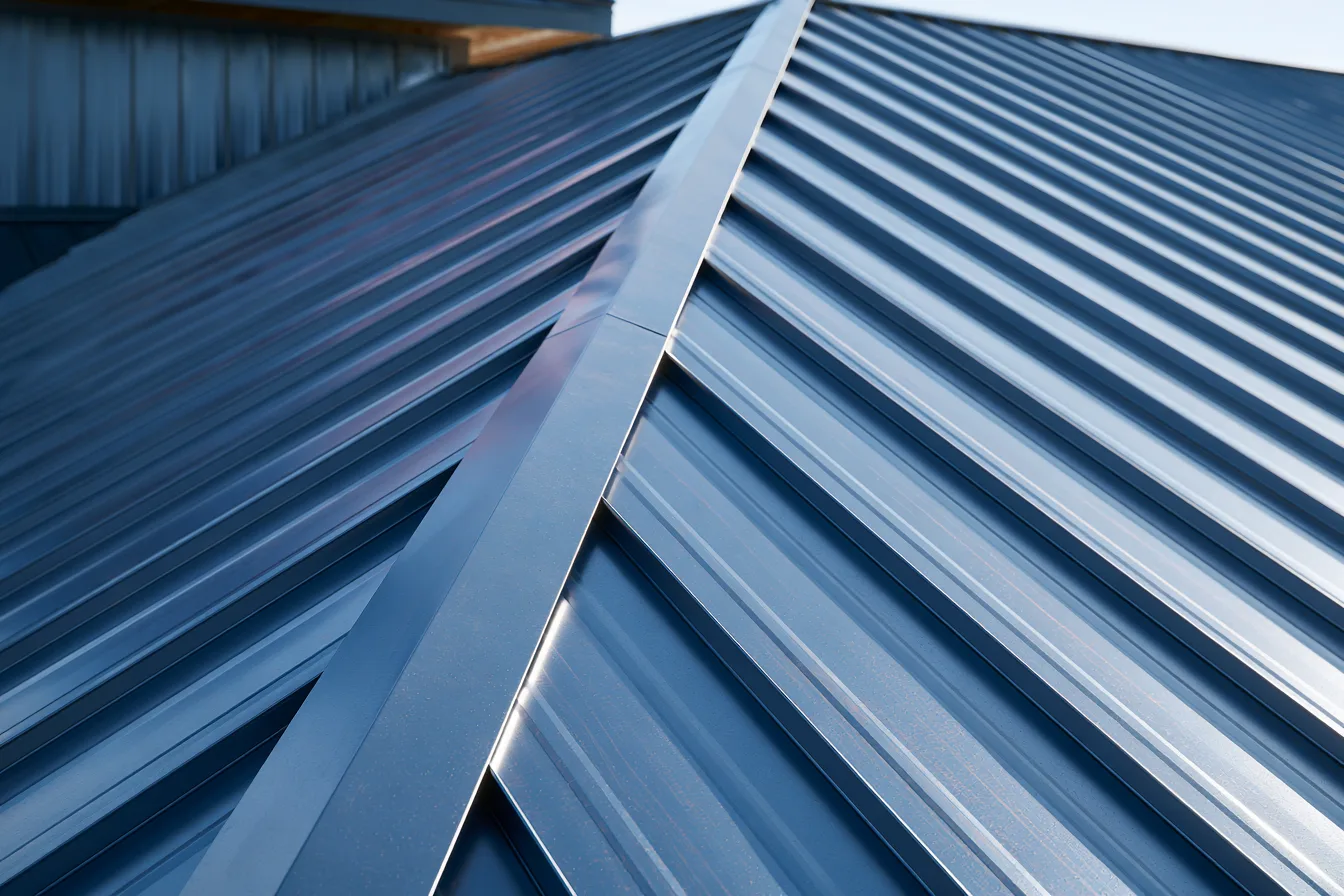
Exposed-fastener panels and standing-seam assemblies have different attachment and movement details. The exact system should be identified before panel price or finish is compared. Metal expands and contracts, so its specified connections matter.
Panel layout and trim also shape appearance and labor. Several intersecting small planes require different planning from a broad simple roof. Penetrations and roof-to-wall transitions remain critical water routes, just as they do on a shingle roof.
Compare installed projects, not only covering prices
A meaningful estimate includes removal, base work, protective layers, flashing and the selected assembly. The labor and materials differ between shingle and metal systems. A low covering price may omit work that another proposal includes.
Access, debris handling and newly exposed decking can change either project. Ask what remains, what is replaced and how unknown conditions will be handled. Those boundaries are more useful than assuming one material is always a fixed amount more expensive.
Performance and care remain product-specific
No material is immune to every storm or leak. Shingle damage and metal dents can involve different repair and policy questions. Product warranty and installation coverage also have separate terms and responsibilities.
Maintenance needs to reflect the chosen system. Details, roof traffic, runoff and penetrations remain relevant even when the broad covering is durable. A material category cannot guarantee the service life of the installed roof.
Compare shingle and metal options for your roof
Our shingle roofing page develops profile and system choices. Metal roofing explains panels, attachment and the roof details behind that option.
Read metal roofing for those system distinctions, or request a free inspection with Jenks Roofing Pros to discuss the project at your house.