Five Roof Changes Worth Checking Before Storm Season
Published · Updated 2026-10-03
A roof does not need a prediction about the next storm. It needs attention to the changes already present. A missing shingle, recurring stain or loose edge can identify a useful inspection question without proving that the entire roof is about to fail.
Jenks Roofing Pros can help examine those concerns. Request a free roof inspection and tell us what changed; there is no need to climb the roof or diagnose the defect first.
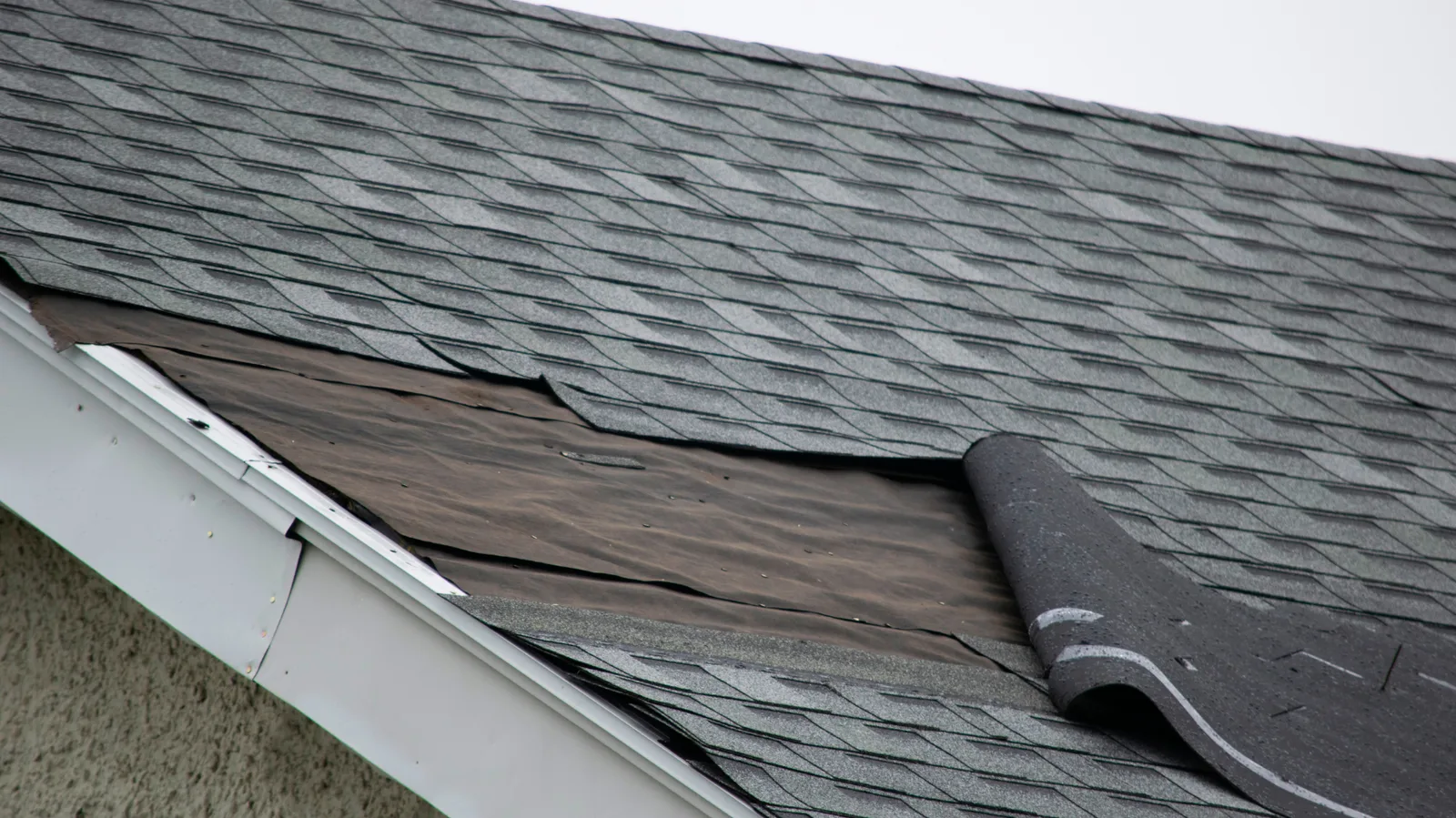
1. Covering has moved or gone missing
Overlapping shingles direct water down the roof. When one tears, lifts or disappears, that path is interrupted. The material below it may be exposed, and rain can reach a layer that was not intended to act as the finished roof.
The repair question is not simply how many shingles are missing. New material must join usable adjoining shingles and a sound base. Brittle or broadly worn covering can make that connection harder and widen the work. A localized loss can still suit a repair when the surrounding roof remains usable.
2. A stain returns with rain
An indoor stain is evidence of water reaching the room, but it does not locate the roof opening. Water can enter at flashing or damaged covering and travel below the surface before becoming visible.
A stain that dries between rains still deserves attention. The roof investigation needs to trace the likely water route and examine the affected layers. If water is entering now, call and say so first; keep people away from sagging ceilings and wet electrical fixtures.
3. A roof connection has visibly changed
Pipes, chimneys and roof-to-wall joints interrupt the covering. Flashing and boots carry water around them. A separated joint or damaged collar can create an entry while the surrounding shingle field still looks intact.
A repair needs to restore that connection, not only cover it with surface sealant. Sometimes surrounding shingles must be opened to reach the failed detail. The condition of those shingles and the decking below determines how much material needs work.
4. The roof edge or gutter is not carrying runoff
A sagging gutter, separated outlet or water behind the gutter can affect the roof’s lower connection. Blockage, pitch and attachment each change the water route. Replacing the gutter alone is not the answer when the roof edge is delivering water behind it.
Describe the visible overflow from the ground. There is no need to lean across an edge to inspect the joint. The gutter and roof-edge connection can be examined together so the repair follows the actual interruption.
5. Deterioration is broad or repairs keep recurring
Repeated leaks in different locations or broadly deteriorated covering can make another small repair less useful. That differs from one damaged detail on an otherwise sound roof. Age supplies context, but the present covering and connection conditions establish the decision.
A replacement conversation should identify what it would correct: worn material, failing details or unsuitable retained layers. It should not follow a promise that a particular roof will fail in the next storm.
Our roof repair page explains how surrounding condition changes the repair boundary.
Request an inspection of changed roof conditions
The changes above are reasons to get a roof looked at, not a failure forecast or instructions for a homeowner roof climb. An inspection can distinguish a local repair from a broader roof concern.
Tell Jenks Roofing Pros what you noticed and request a free inspection. The useful next step is a clear roofing answer at your property.